15-440 & 15-441: Distributed Systems and Networks
Course projects from CMU 15-440 (Distributed Systems) and 15-441 (Computer Networks), covering protocols from transport to application layer, consensus algorithms, and privacy-preserving networks.
Raft (15-440)
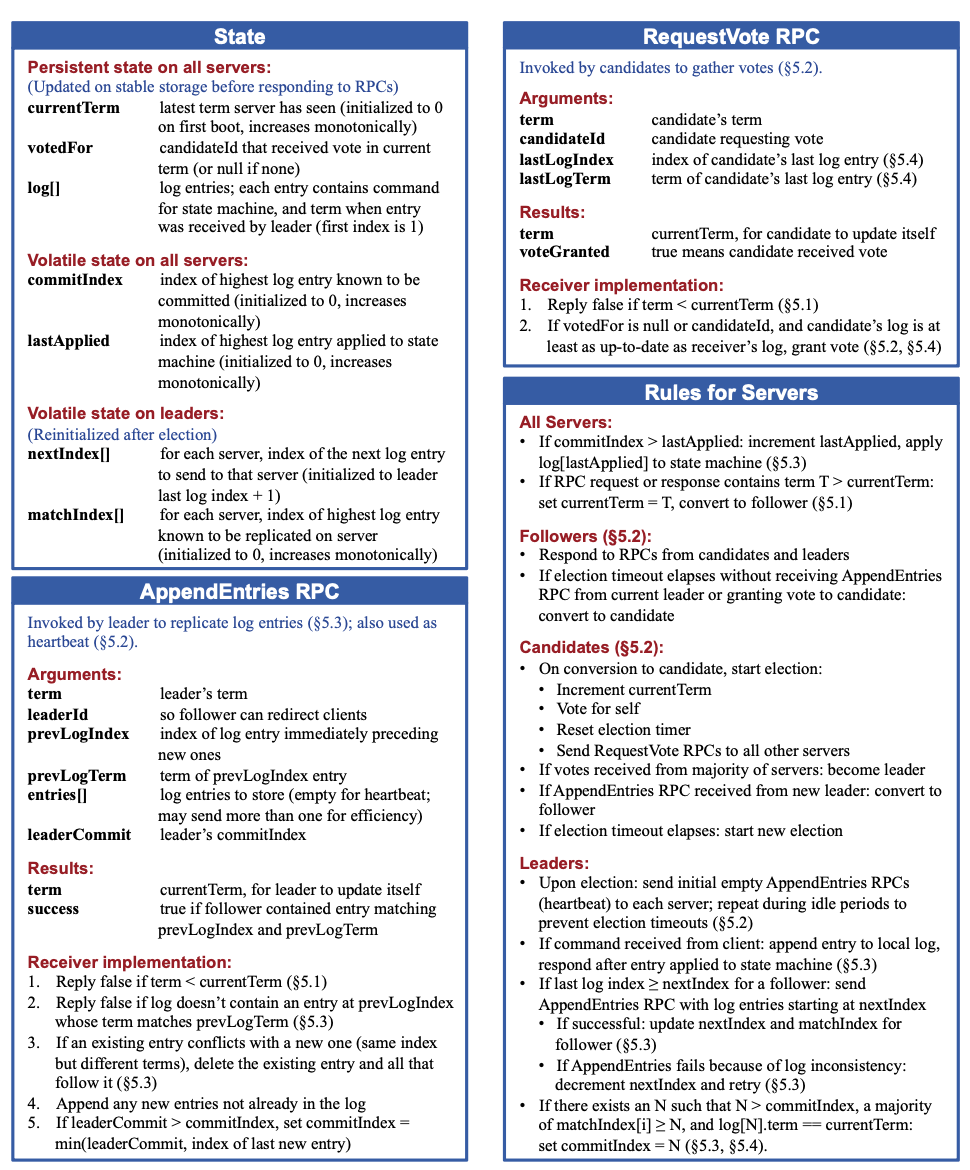
Reimplementing the distributed log consensus protocol - Raft.
Raft Routine
Live Sequence Protocol (LSP) (15-440)
A distributed transport layer protocol with both features from TCP and UDP.
The Live Sequence Protocol (LSP) was developed as part of this project to provide a reliable client-server communication layer over the UDP protocol. UDP, while efficient for fast data transmission, lacks the built-in reliability mechanisms present in TCP. To address this, LSP incorporates features to overcome common issues in UDP-based communication, such as packet loss, duplication, and corruption, thereby enabling error-free, sequential message delivery.
- Reliable Message Delivery: The protocol uses acknowledgment (Ack) and cumulative acknowledgment (CAck) messages to confirm message delivery and maintain the correct sequence, ensuring all messages are received in order.
- Sliding Window Flow Control: A sliding window mechanism controls the flow of unacknowledged messages, preventing network congestion by aligning message transmission with acknowledgment rates.
- Epoch-Based Retransmission System: By utilizing epoch timers, LSP detects lost messages and initiates retransmissions. This system also manages connection timeouts and sends regular heartbeat signals to maintain active connections.
- Data Integrity Verification: LSP applies a checksum to every message, allowing detection and rejection of corrupted messages. This feature ensures that only complete and accurate data is processed, maintaining high data integrity.
The result is a robust protocol layer that combines the speed of UDP with the reliability of TCP, suitable for applications requiring reliable, real-time client-server communication.
TCP + TCP Reno (15-441)
TCP protocol implemented in C, with Reno congestion control.
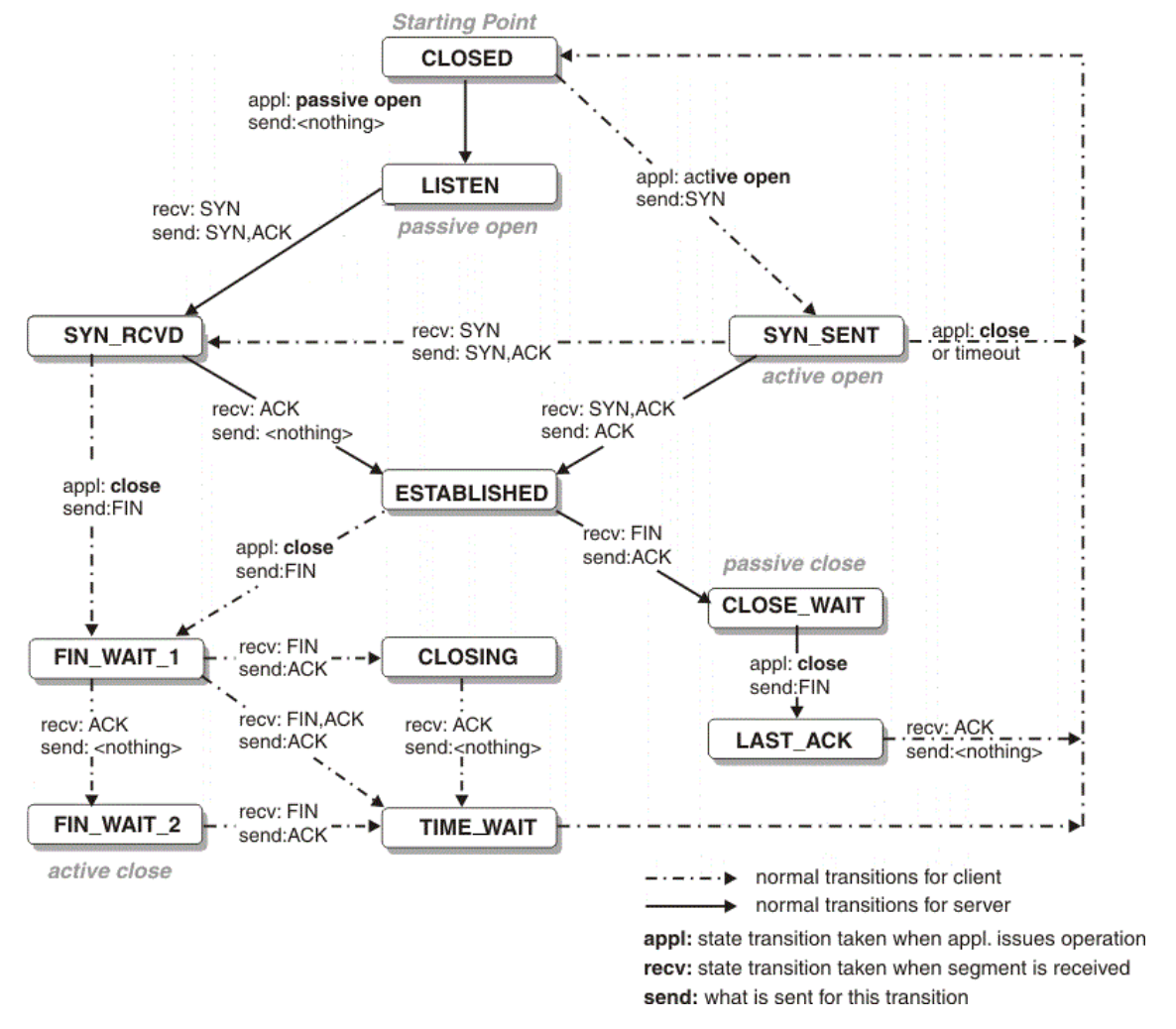
TCP is a transport layer protocol that enables processes on different devices to communicate reliably. TCP’s beauty stems from its ability to give applications a simple abstraction with strong guarantees, even though the underlying network only provides best-effort delivery.
This project includes the following components of TCP:
- Start and Teardown: TCP three-way handshake and connection teardown via FIN
- Sliding Window: Transmit multiple packets before an ACK by using a fixed window size
- Reliable Retransmission (include option to use either Go-Back-N or Selective Retransmit): Retransmit packets after a timeout (Go-Back-N and Selective Retransmit), on duplicate ACKs (Selective Retransmit), etc.
- Flow Control: Advertised window
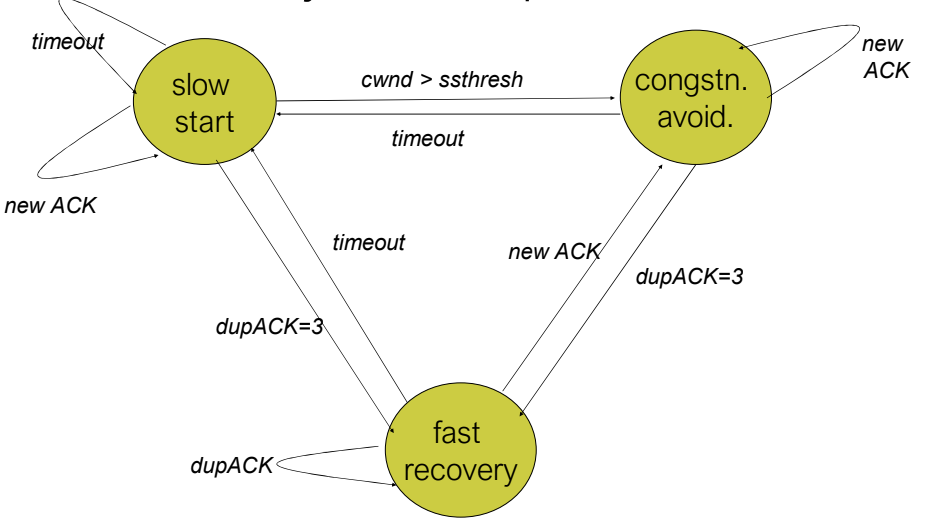
- Congestion Control: TCP Reno
TCP Routine
TCP Reno
Liso Server - HTTP 1.1 (15-441)
A Liso web server supporting HTTP 1.1 at the application layer, and a smart client able to parallelly process and request files based on a lineage graph.
Liso HTTP 1.1 Server Implementation
- A web server capable of handling HTTP requests (GET, HEAD, etc.) from multiple clients concurrently.
- Implements robust error handling (e.g., HTTP 404, HTTP 503, HTTP 400) and overload protection.
- Efficient handling of concurrent connections using the poll() system call.
Smart Client Implementation
- A custom client replacing standard web browsers to interact with the server.
- Implements HTTP/1.1 optimizations such as pipelining (concurrent inflight requests) and parallel connections.
Mix Network - Mixnet (15-441)
A distributed network layer algorithm to establish reliable, efficient, and secure communication between nodes in the network.
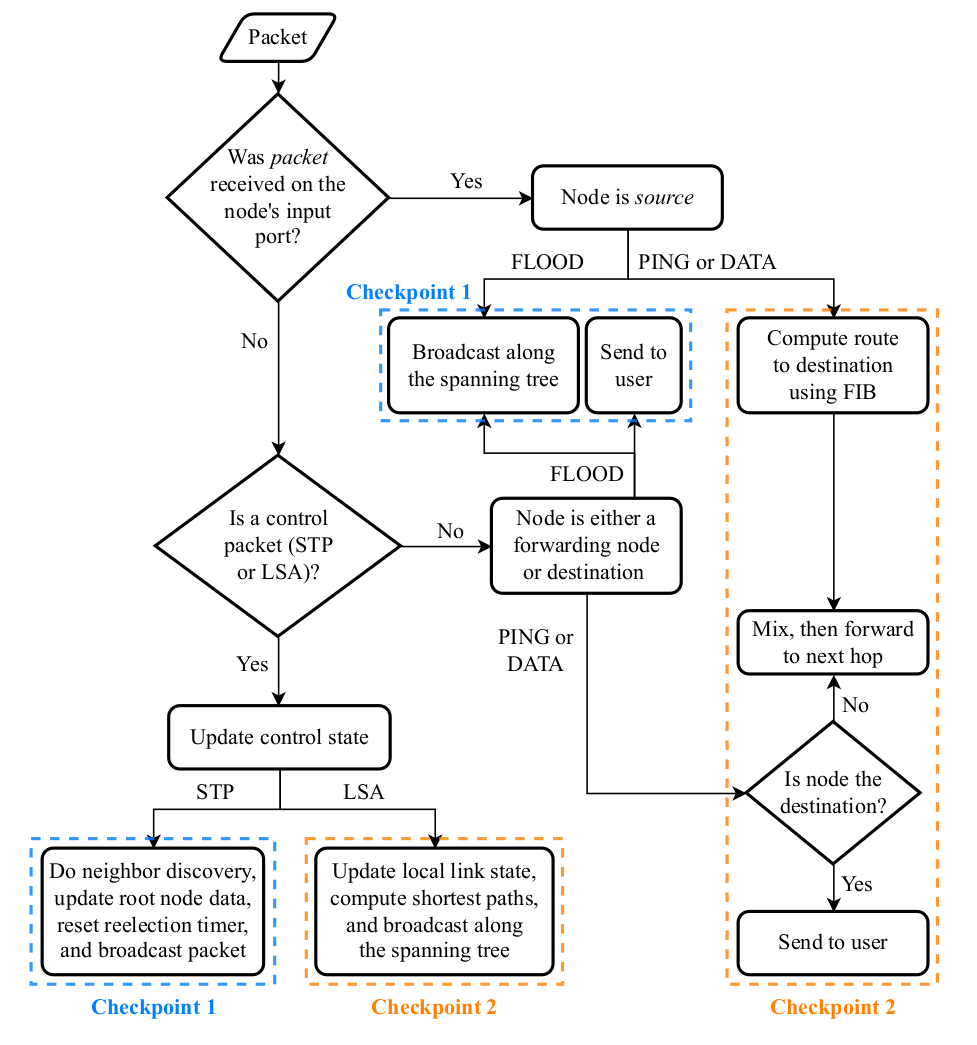
The Mix Network (Mixnet) project aims to create a privacy-preserving network overlay that enables anonymous communication by obscuring both the message content and the identities of communicating parties.
Key Features
- Encryption: Ensures that any intercepted messages are unintelligible without proper decryption, keeping message contents secure.
- Redirection: Messages are relayed through intermediate nodes to hide the source and destination, making it difficult for observers to link senders and recipients.
- Mixing: Nodes delay and batch messages before forwarding, further concealing the source-destination pairings from observers.
Network Architecture
- Composed of interconnected nodes that operate as both sources and forwarders, Mixnet forms an undirected graph where nodes are linked to each other.
- Each node uses a combination of shortest-path and random routing strategies to relay messages, balancing efficiency and privacy.
- Mixnet uses the Spanning Tree Protocol (STP) to create a loop-free topology, enabling safe and efficient broadcast of control messages across the network.
Packet Structure
Mixnet packets contain a standardized header and payload, with various packet types (STP, FLOOD, LSA, DATA, PING) supporting routing, control, and communication functions.